|
| | |
|
We have years of experience in the application of sealers and addresing concrete problems please visit our SealGreen Library and if you can not find the answer here or in our library please call us at 1-800-997-3873
We are here to help!
Sincerely,
The SealGreen.com Team
Dear SealGreen Team,
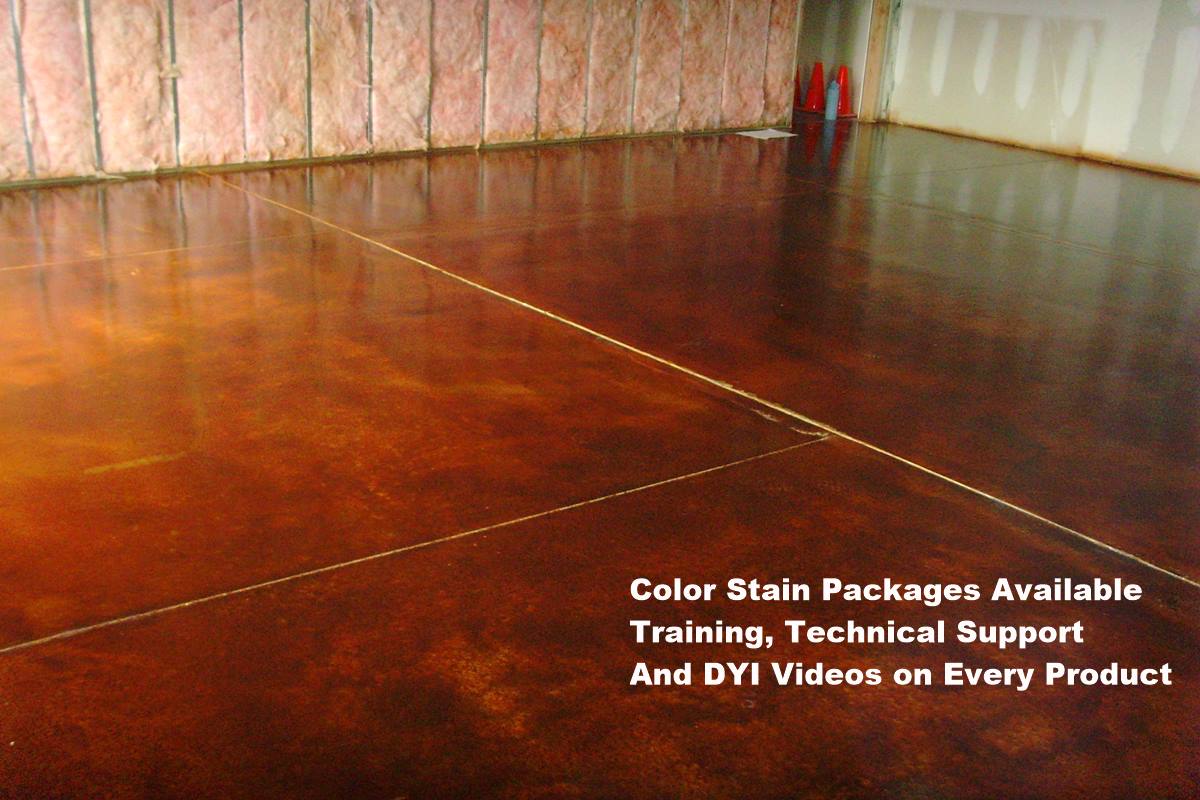
We had our basement floor acid-stained and sealed about six months ago. It was beautiful when it was done but is already fading and looking drab. Is there anything we can do to restore it to its once beautiful condition or do we have to start all over again?
Concerned in Leawood
Dear Concerned,
No, you don’t have to start all over again. The standard method of doing acid stain floors is to clean the floor and then apply the acid stain to get the desired colors and effects. The acid staining only colors the concrete so a sealer is needed on top to protect the colored concrete from damage. Most contractors use some type of acrylic coating for this sealer. This acrylic is a coating which means that it lies on the surface of the concrete and is itself susceptible to wear and tear from foot traffic, moving furniture, pets, etc. and so an inexpensive wax is put on top the coating to protect it. If your floor is becoming tired looking, it probably needs a new coat of wax which is easy for you to apply yourself. We sell a great top coat.
SealGreen.com prefers to use waterborne stains to provide color and then a water-based sealer and a water-based hard surface protector for a long-term, low maintenance solution to basement floors. This flooring solution only requires a damp mop to keep it clean and in excellent condition. A good tip to remember is that the less expensive the sealer is up front, the more maintenance will be required over the long term. The more expensive the sealer is up-front the more durable and the less maintenance will be required over time.
Dear SealGreen Team:
What is the difference between the sealer that I can buy at the local hardware store and the sealer that you sell?
Great question! There are as many sealers under as many names as there are fish in the ocean. It can get confusing even for people “in the business” much less to the consumer.
There are 6 main types of clear sealers – no matter what the name or the jargon used in the advertising - there are only 6 main types of sealers – unless you get into the high performance sealers such as epoxies or urethanes.
-
Acrylic Sealers (Surface Sealers) – These have excellent adhesion but limited performance (3 to 5 years depending on sun and weather exposure). These are typically used for aggregate driveways, stamped concrete, or when shine is desired. These sealers give a “wet look” to your concrete, pavers, etc. They protect against salt for the first 3 to 4 months. However, they are slipperier than other sealers and you may need to put an anti-skid on top.
-
Silicones – Some good properties but very short life span. Also, when they start to break down, they not only attract dirt but also make that dirt part of their chemistry so it is impossible to remove. One example of this that we run into frequently is Armorall for tires. When you get this on your driveway, the concrete is sealed but this area will attract dirt that cannot be removed. Use anything with silicone in it in an area that won’t get on your concrete. Silicone sealers also work the same way on wood.
-
Silicates – Smallest molecules of all sealers designed for the deepest penetration. Helpful for smooth finish concrete like garages or basement floors, however it must be scrubbed in or FLOODED on porous concrete. DO NOT USE on vertical applications. Ideal for sealing bridges or overpasses where the bottom section of the concrete needs to be sealed.
-
Silanes – Good penetration, small molecules, lacks topical protection.
-
Siloxanes – This is what SealGreen - Clay Brick and Natural Stone Sealer is. Larger molecule, more topical, short life as a rule. Many times a combination silane/siloxane is used for very porous materials such as brick, split face block, or limestone.
-
Siliconates – This is what SealGreen - Concrete Sealer is. It is a chemically reactive, water based sealer with exceptional topical closure and deep permanent sealing properties. These have larger molecules and are designed specifically to seal the top section of the concrete slab. It has excellent endurance and fusion, is very flexible, has superior strength, and a great life span. Silicanate sealers are the top-of-the-line for concrete sealers.
Other hints about picking sealers:
-
Anything that says it is a coating screams “temporary”. Any coating will wear away over time.
-
When choosing a sealer beware of the words “penetrating”. Anything will penetrate unsealed concrete. That is why it needs to be sealed. The sealer needs to not only penetrate but to chemically react so that it stays there.
-
Ask to see the independent testing done on the sealer. There are ASTM cure and seal tests. The contractor that you use or the product that you choose should be able to provide with independent verification of how well the sealer will work.
| |
| | |
|
|
|